What is SRS, and why its the best tool for memorizing Japanese
Spaced repetition (SRS) times your reviews so you see each item right before you would forget it. You spend less time reviewing and remember more of what you study.
SRS outcome
Better more reliable recall
Better recall
You review only what matters when it matters. Everything is automated
For Japanese
Vocab + grammar
Japanese demands heavy memorization across writing, vocabulary, and grammar.
Review less often
Easy items get spaced farther apart over time.
Catch forgetting early
Hard items return sooner before they fully disappear.
Build long-term retention
Short daily sessions compound into durable knowledge.
How it works
SRS is built around timing, automating reviews for how your brain naturally remembers things.
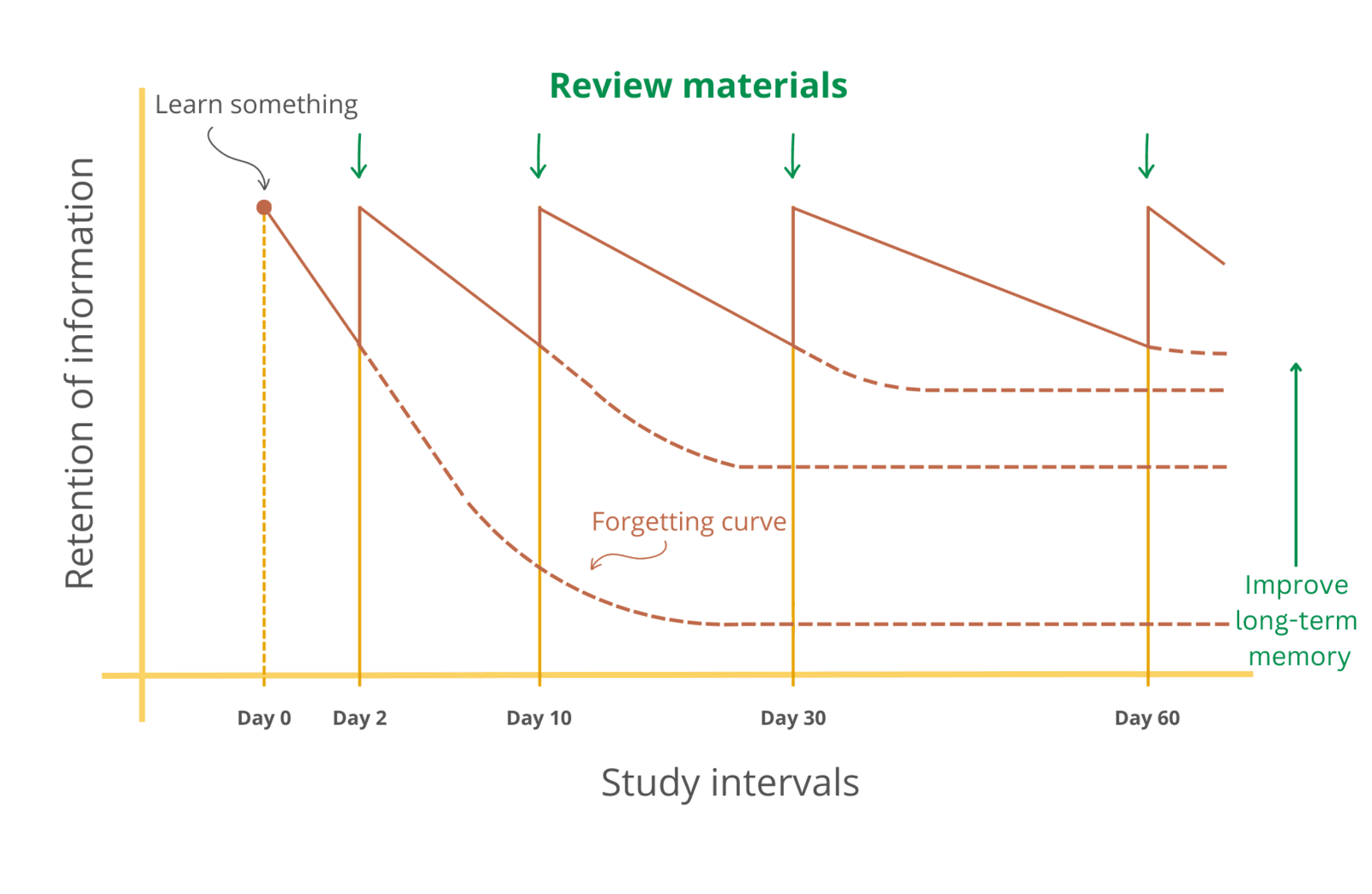
Instead of reviewing every card every day, an SRS scheduler tries to show each item at the point where recall is effortful but still possible. That effort is what helps memory stick and how long term memory consolidation works.
Start
Learn and adopt the item
A new vocabulary or grammar item enters your review cycle after the first learning pass, so ReBabel can start tracking it instead of leaving it as one-off study.
Same day
Get an early check-in
Your first scheduled return is soon after learning, which helps catch weak recall early before the item fades too far.
Next few reviews
Move up when recall is clean
When you get through a review without mistakes, the item levels up and the gap grows from about a day to several days and then weeks.
Long term
Keep mature items alive
As items become stable, reviews spread out toward monthly and multi-month check-ins, while missed items get pulled closer again so they do not drift away.
Anki and SRS
 How apps like Anki use spaced repetition
Anki is popular because it gives learners a flexible flashcard system with a scheduler underneath. The core idea is simple: your feedback after each card changes when you see it again.
You create flashcards with a prompt on the front and an answer on the back.
Anki asks you to grade how hard recall felt after every review.
Its scheduler uses that feedback to decide when each card should appear again.
Easy cards wait longer. Hard cards return sooner. Leeches show up more often until they stick.
ReBabel AND SRS
 How ReBabel does it better
ReBabel takes the proven idea of spaced repition and integrates it with better item introduction tools and a full study ecosystem.
Definitive Feedback
Leveling is fully automated, no need to guess at how hard an item felt to remember.
Study Beyond SRS
Items you add are not limited to SRS, they are accessible to every feature on the platform.
New Words Study Faster
New words are gradually introduced through custom stages that help memory.
Forget Flashcards
Reviews require typed responses that help engage the learner and improve retention.
Using it on ReBabel
How to use SRS on our platform
ReBabel follows the same memory principles as dedicated flashcard tools, but with more automated study flows and a more polished, comfortable practice experience.
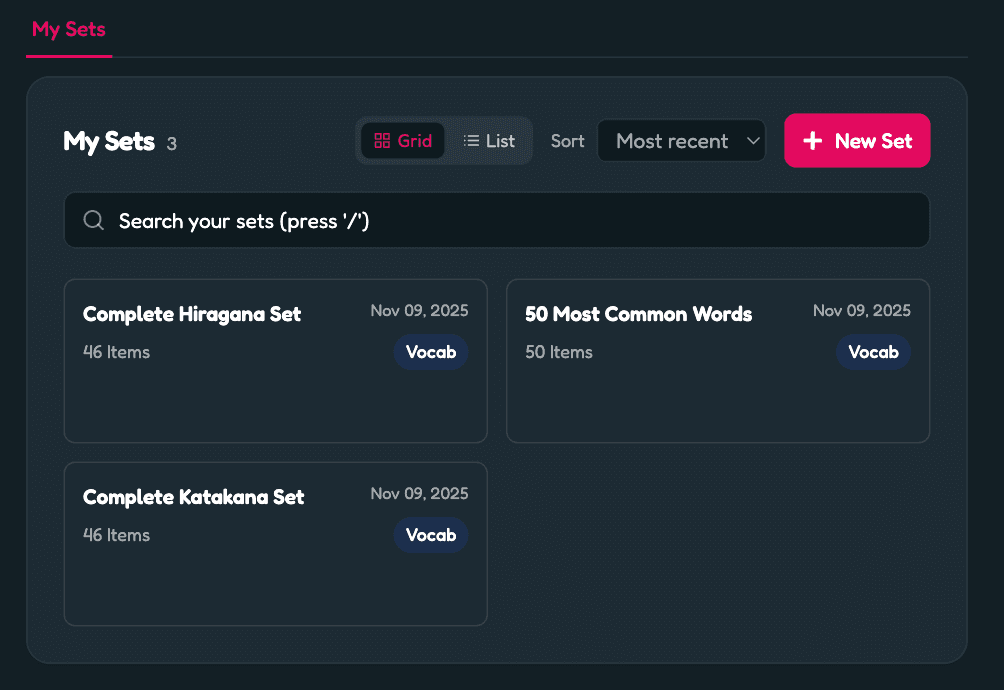
Create or choose a study set
Build a custom set around textbook chapters, weak grammar, or upcoming JLPT material so your reviews stay relevant.
Use this page as the conceptual guide, then jump into your account to build a review habit around the exact material you are already studying.
Study from the SRS control panel
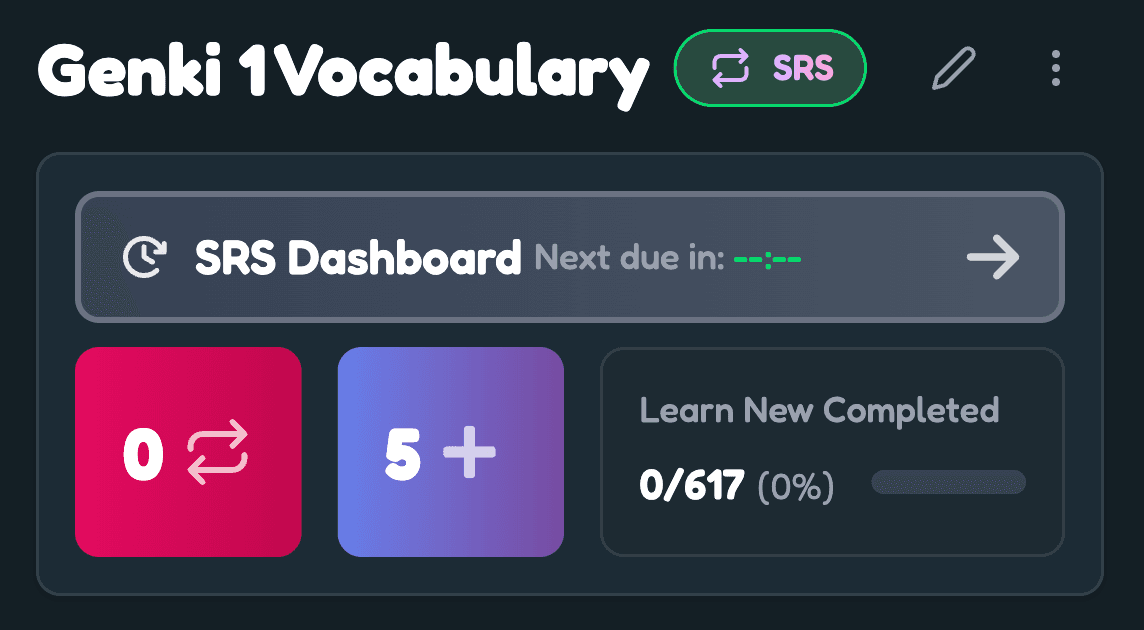
From the SRS Dashboard, use Due Now on the left to review ready items, then Learn New on the right to bring the next batch into your SRS cycle.
Make sure the set header shows SRS Enabled before you start.
Stay in a daily practice rhythm
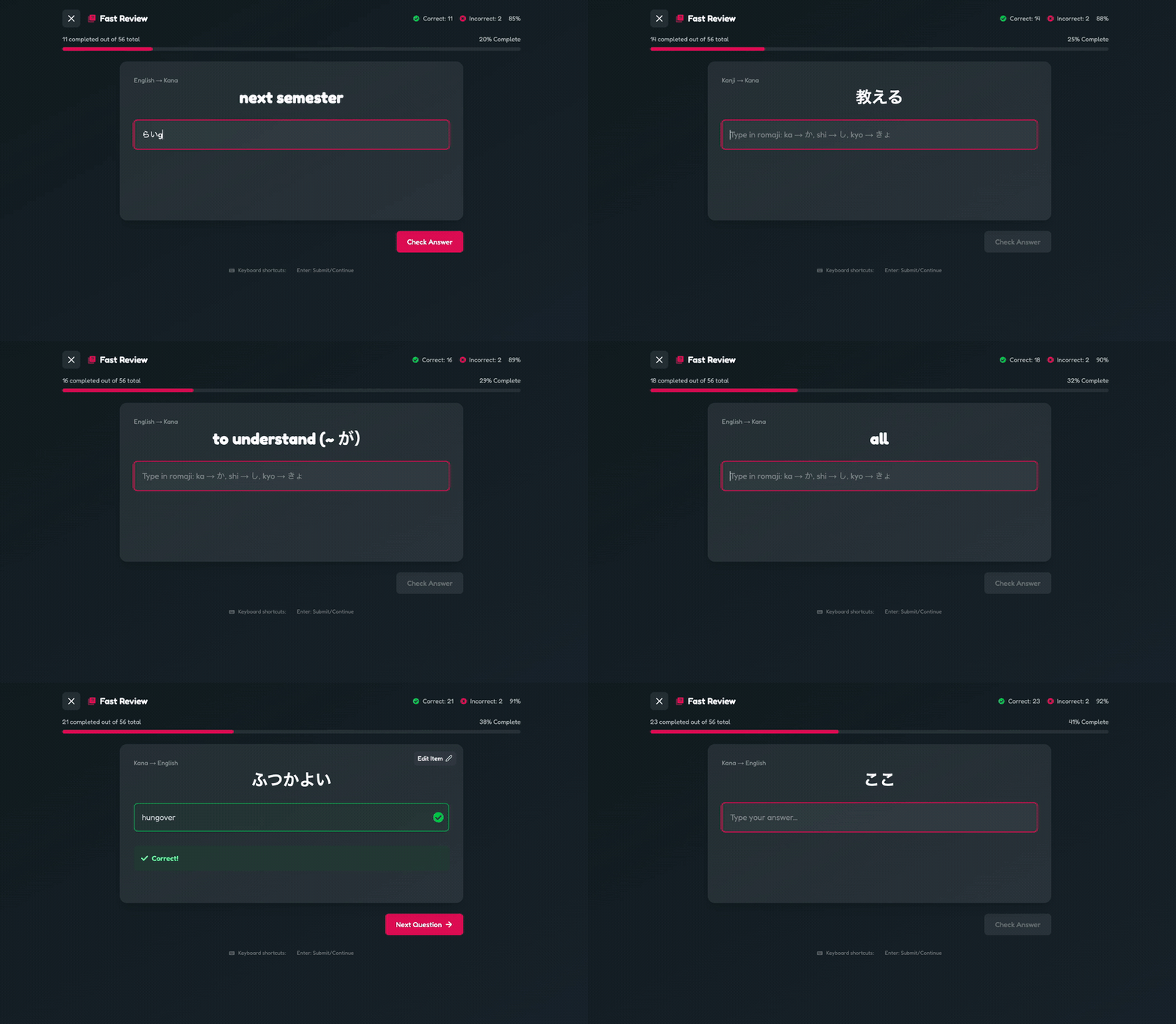
Open your queue, clear due reviews, and keep sessions short enough to stay consistent. The goal is steady progress, not marathon cramming.
Use Fast Review to review items due across all of your sets in one go.
Best practices
How to get the most out of SRS
Review every day, even if it is only 10 to 15 minutes.
Keep new Items manageable (~10 max) so your due count does not explode later.
Use the mobile app to get notifications for when items are due!
Use other features like quiz or flashcards to review words that cause repeated trouble.
Good to know
What to expect when starting
SRS usually feels more active at the beginning because new items return sooner. As recall improves, the gaps between reviews get longer and the workload becomes easier to manage.
- New items come back sooner than mature ones.
- Reviews feel more frequent at first, then spread out over time.
- Missing an item does not break the system - it simply comes back sooner.
- Short daily sessions work better than occasional catch-up marathons.
If the system feels repetitive at first, that usually means it is doing its job: helping weak memories stick before they fade.
Next step
If SRS makes sense to you, the best move is to start small and stay consistent.
Create a set, review what is due, and let repetition work quietly in the background while you keep studying Japanese.